NHS Trials New Blood Tests to Detect 13 Types of Cancer Earlier
4 November 2026
Thousands of NHS patients could benefit from new blood tests designed to identify 13 different types of cancer, potentially allowing doctors to detect the disease much earlier than is currently possible.
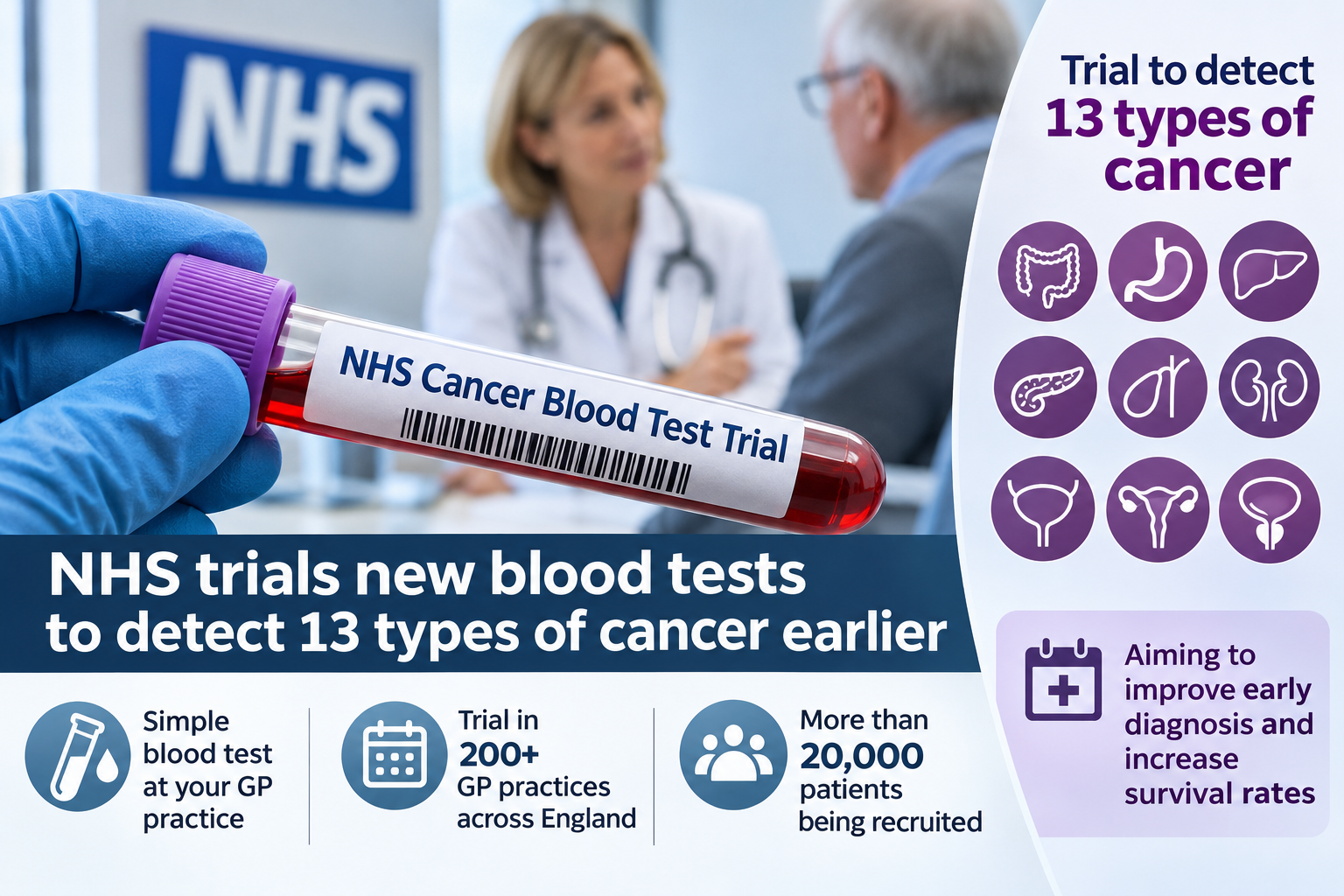
The major NHS trial, known as STRIDE-RCT, will involve more than 20,000 patients across approximately 200 GP practices in England. It is hoped that a simple blood test could help doctors identify patients who need urgent cancer investigations, particularly where symptoms are vague or easily mistaken for less serious conditions.
The research is being led by the University of Birmingham and could represent an important development in the fight against delayed cancer diagnosis.
How Will the New NHS Cancer Blood Tests Work?
The trial will examine three different blood tests capable of identifying possible warning signs of cancer from a small blood sample.
Some tests search for tiny fragments of DNA released by tumours into the bloodstream. Others look for proteins associated with the body’s response to cancer.
The aim is not simply to identify cancer but to help doctors establish where further investigations may be necessary.
The trial will investigate blood tests for 13 cancers, including:
- Bowel and small bowel cancer
- Pancreatic cancer
- Stomach and oesophageal cancer
- Liver, bile duct and gallbladder cancer
- Ovarian and endometrial cancer
- Kidney and bladder cancer
- Prostate cancer
Importantly, a positive blood test would not automatically mean that a patient has cancer. Further investigations would still be required. Equally, a negative result would not completely exclude cancer.
Why Earlier Cancer Diagnosis Could Save Lives
One of the greatest challenges facing GPs is recognising cancer when patients present with relatively common symptoms.
Persistent bloating, abdominal discomfort, changes in bowel habits and unexplained stomach pain can have many causes. Most are not cancer-related, but occasionally these symptoms are the first warning signs of a serious illness.
The consequences of a late diagnosis can be devastating.
For example, approximately 90% of patients diagnosed with stage 1 bowel cancer survive for at least five years, compared with around 10% diagnosed at stage 4.
These figures demonstrate why recognising symptoms, arranging appropriate investigations and avoiding unnecessary delays are so important.
The NHS trial could provide GPs with another valuable diagnostic tool, helping them distinguish between patients who require urgent investigations and those whose symptoms may have less serious explanations.
Could These Blood Tests Reduce Delayed Cancer Diagnosis?
At Hutcheon Law, we regularly encounter cases where patients have experienced delays in cancer diagnosis, sometimes following repeated GP consultations or missed opportunities to investigate concerning symptoms.
A delay does not necessarily amount to medical negligence. However, where a healthcare professional fails to recognise warning signs, arrange appropriate tests or make a timely referral, there may be grounds for a claim if that failure causes avoidable harm.
We have particular experience dealing with delayed cancer diagnosis compensation claims, including cases involving bowel cancer and prostate cancer.
The hope is that developments such as the STRIDE-RCT trial will eventually reduce the number of patients whose cancers remain undetected until treatment options become more limited.
A Promising Development, But Further Research Is Needed
Although the new blood tests offer considerable promise, they remain under clinical investigation.
Indeed, research into another multi-cancer blood test, known as Galleri, has demonstrated why rigorous trials are essential. The NHS-Galleri trial findings published in September 2026 did not meet the study’s main objective of reducing the combined number of stage 3 and stage 4 cancer diagnoses.
STRIDE-RCT will now examine whether a different approach, involving patients who already have potentially concerning symptoms, can improve decisions about further investigations and ultimately lead to earlier diagnoses.
For patients and their families, this is encouraging news. A relatively straightforward blood test that helps doctors recognise cancer sooner could make a meaningful difference to treatment and survival.
Delayed Cancer Diagnosis – How Hutcheon Law Can Help
While medical research continues to improve cancer detection, patients must still receive appropriate care under existing NHS diagnostic and referral pathways.
Where avoidable delays have resulted in a cancer progressing, more extensive treatment or a reduced prospect of recovery, specialist legal advice may be appropriate.
At R James Hutcheon Solicitors, we investigate medical negligence claims involving delayed cancer diagnosis and the consequences for patients and their families.
Contact our specialist team on 0151 724 7121 for a confidential discussion.
Contact Us Now To Claim