A major breakthrough in cancer research has offered fresh hope to thousands of people diagnosed with melanoma, one of the most serious forms of skin cancer.
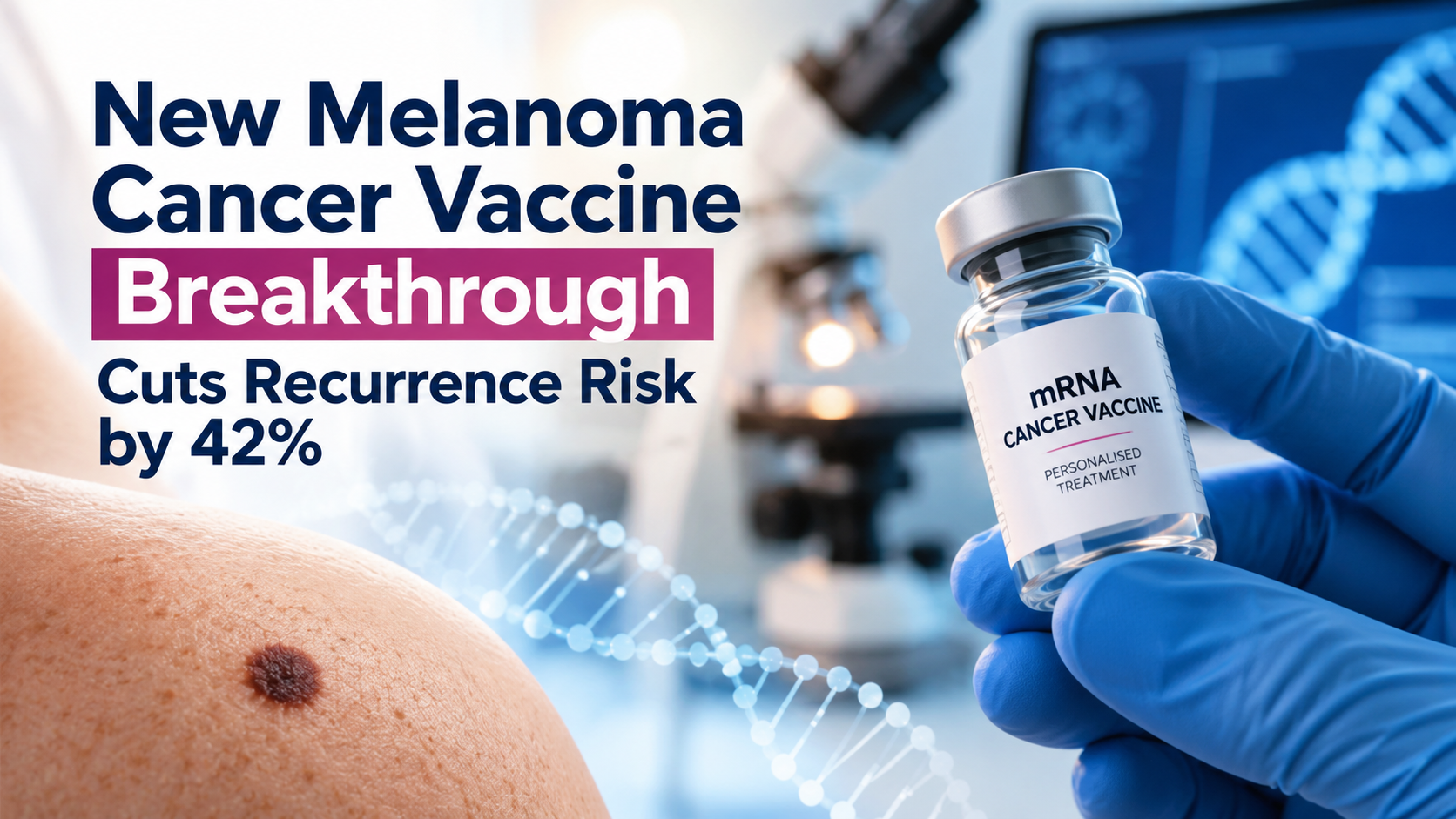
Scientists have revealed that a new personalised cancer vaccine, developed using mRNA technology, has reduced the risk of melanoma returning or patients dying by 42% when combined with an existing immunotherapy treatment.
The encouraging findings, announced on 22 October 2026, follow a major international clinical trial involving more than 1,100 patients.
A Cancer Vaccine Designed for Each Patient
Unlike traditional vaccines, this new treatment is designed specifically for the individual patient.
Researchers analyse the genetic characteristics of a patient’s tumour before developing a personalised vaccine intended to help the immune system recognise and attack cancer cells.
The treatment, developed by Moderna and Merck, is administered alongside the established immunotherapy drug pembrolizumab, also known as Keytruda.
According to the latest Phase 3 clinical trial results announced by Moderna and Merck, approximately 82% of patients receiving the combined treatment remained free from melanoma recurrence after two years, compared with 70% receiving immunotherapy alone.
These findings offer genuine hope for patients who have undergone surgery to remove melanoma but remain at risk of the cancer returning.
Could Personalised Vaccines Transform Cancer Treatment?
The implications of this research could extend far beyond melanoma.
Scientists are investigating similar approaches for other cancers, including lung and pancreatic cancer, raising the possibility that personalised vaccines could become an important part of future cancer treatment.
The results have also attracted considerable international attention, with Reuters reporting on the significance of the melanoma vaccine breakthrough.
Although further research and regulatory approval are required, the findings represent another encouraging step forward in the fight against cancer.
For patients and their families, it is welcome news that medical science continues to develop new ways of tackling this devastating disease.
Early Cancer Diagnosis Remains Important
While these advances are exciting, the importance of diagnosing cancer as early as possible remains unchanged.
The NHS highlights the importance of recognising changes in moles and other possible symptoms of melanoma, as earlier detection can significantly improve treatment prospects.
Unfortunately, some patients experience avoidable delays in cancer diagnosis, including missed referrals, incorrect assessments or failures to investigate suspicious symptoms.
Where a delay has resulted in cancer progressing or caused avoidable harm, there may be grounds to pursue a medical negligence claim.
At Hutcheon Law, our experienced solicitors investigate delayed cancer diagnosis compensation claims, including cases involving melanoma and other forms of cancer.
If you or a loved one has suffered because of a delayed cancer diagnosis, we can advise you about your legal options under our No Win No Fee service.
Hutcheon Law – Medical Negligence Solicitors
Telephone: 0151 724 7121
Contact Us Now To Claim