Delays in hospital care can lead to clinical negligence compensation claims. It’s a given. Many urgent symptoms can be left unnoticed, until it’s too late or when eventually treated has lead to poorer outcomes for the patient. In both instances as specialist clinical negligence solicitors we can help you claim compensation for poor and negligence treatment.
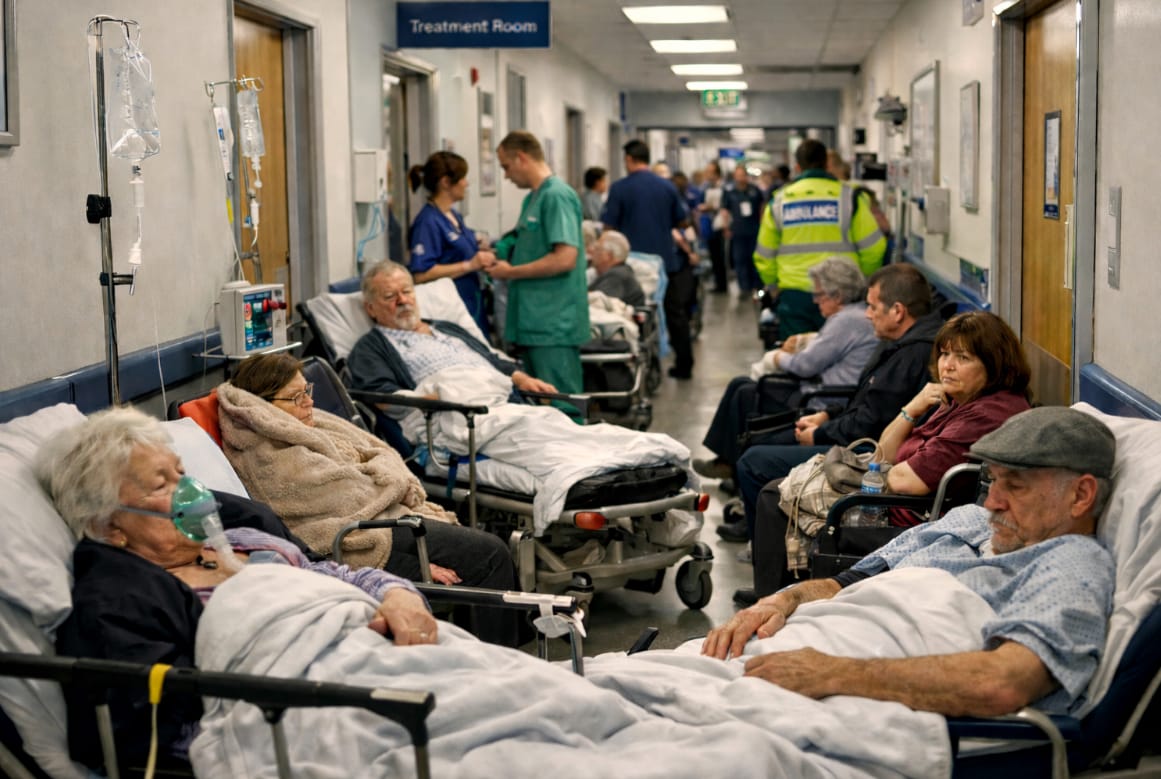
The increasing use of corridor care in NHS hospitals has become one of the most troubling symptoms of pressure on emergency and inpatient services. Patients who should be in dedicated clinical spaces are instead cared for on trolleys in corridors, chairs in hallways or overflow areas not designed for clinical use. This situation is now routine rather than exceptional. Reports suggest that approximately one in five patients in some emergency departments are being treated in corridors or similar temporary care environments, with serious implications for safety and outcomes.
Hosptial Corridor Claims are Unacceptable
Corridor care is unacceptable as a standard of medical practice. It undermines dignity, privacy and most importantly patient safety. Independent investigation by the Health Services Safety Investigations Body highlights clear risks associated with care delivered in spaces that are not designed or properly staffed for clinical care. These spaces often lack basic infrastructure such as piped oxygen, suction equipment, adequate monitoring and direct sightlines from clinical teams.
Why Corridor Care Happens
The reliance on corridor care stems from broader failures in patient flow through the health and social care system:
- Overcrowded Accident and Emergency (A&E) departments where more patients arrive than there are beds available.
- Delayed discharges from hospitals due to social care bottlenecks, preventing admittedpatients from moving on.
- Insufficient inpatient capacity, forcing hospitals to use temporary spaces to hold patients pending a bed.
- Staffing shortages and pressure, leaving wards and emergency areas stretched beyond safe capacity.
The combination of these factors means patients may be left in corridors not just for hours, but for days, without proper monitoring or timely escalation if their condition deteriorates.

The Human and Clinical Cost
Corridor care directly contributes to poorer outcomes, delays in treatment, and missed diagnosis for many time-critical conditions, including strokes, heart attacks and sepsis. Patients in temporary care spaces are at heightened risk because:
- Observation and monitoring are compromised, meaning vital changes in condition may not be picked up swiftly.
- Inadequate access to critical investigations such as CT scans, ECGs or urgent blood tests while still in the corridor environment.
- Response to emergencies is delayed when patients are out of direct sight or located away from staffed clinical zones.
- Privacy and dignity are eroded, which can impair communication and affect clinical assessment.
A powerful example of the tragic consequences of delayed diagnosis and corridor care can be seen in the case of a woman who died of sepsis after being left on a hospital corridor, illustrating exactly how vulnerable patients can deteriorate unnoticed while waiting for proper assessment and treatment. You can read a detailed analysis of that case in this blog: Woman dies of sepsis after being left in hospital corridor – the tragic consequences of delayed diagnosis.
Time-Critical Conditions Affected
Stroke, heart attack and sepsis all require urgent recognition and rapid treatment to avoid permanent harm or death. But corridor care environments increase the risk of missing clinical cues because:
- Patients may not be triaged promptly or appropriately.
- There may be delays in initiating key treatments, such as thrombolysis for stroke or antibiotics for sepsis.
- Critical signs can be overlooked when staff are stretched thin.
Research shows that conditions like stroke and sepsis have dramatically worse outcomes when diagnosis is delayed, and even minutes can make the difference between full recovery and long-term disability.


The Crisis Is Real and Escalating
Health leaders warn of a worsening crisis in corridor care, describing it as “endemic” rather than a temporary phenomenon. Staff surveys have confirmed that corridor care is widespread across NHS emergency departments and that nurses feel compelled to deliver unsafe care because there are no alternatives. Reports also highlight the risk of patients collapsing out of sight in these environments with delayed clinical response. Older people and those with complex needs are particularly vulnerable, with leaders describing the situation as “deeply worrying” given the impact on outcomes for frail patients.
Legal Implications and Claims
From a clinical negligence perspective, corridor care that leads to poor outcomes can give rise to claims where it can be shown that:
- The standard of care fell below that which could reasonably be expected.
- A failure to treat or monitor in a timely manner caused or materially contributed to harm.
- Earlier or more appropriate treatment would probably have avoided or reduced the harm suffered.
In cases involving delayed or missed diagnosis of strokes, heart attacks, sepsis or other critical conditions, legal action may follow when care is demonstrably compromised because of systemic failures such as corridor care.
Get Medical Negligence Advice from Expert Solicitors
Corridor care should be a last resort, not a routine practice. The fact it has become common in many NHS trusts is a warning sign that patient care is being compromised at fundamental levels. The crisis impacts the most vulnerable patients and significantly increases the risk of missed or delayed diagnosis of life-threatening conditions, leading not only to poorer clinical outcomes but also to avoidable deaths.
Addressing this problem requires urgent system-wide reform rom improving patient flow and discharge pathways to ensuring enough hospital capacity and appropriate clinical staffing to ensure patients receive the safe, dignified and timely care they deserve.
Util this is resolved, patients will suffer and there will be claims for neglience, rightly so.
Absolutely. Below is a re-ordered, blog-ready “Further Reading and Advice” section, structured so that A and E care, sepsis, and general clinical negligence resources come first, with cancer-specific content placed later, reflecting the focus of this corridor care blog.
All links are embedded in keyword text only, ready for direct copy and paste into WordPress.
Further Reading and Advice on Clinical Negligence Claims

If you or a loved one has suffered harm due to overcrowding, corridor care, or failures in emergency treatment, the following resources provide further guidance on clinical negligence claims arising from A and E settings.
- Clinical and medical negligence solicitors
An overview of clinical negligence claims, including failures in hospital and emergency care, the legal tests involved, and how specialist solicitors support patients and families. - Woman dies of sepsis after being left in a hospital corridor
A detailed analysis of a tragic sepsis death linked to corridor care, highlighting how delayed diagnosis and lack of monitoring in hospital settings can lead to fatal outcomes. - Sepsis misdiagnosis claims
Guidance on claims arising from failures to recognise and treat sepsis promptly, including delays in antibiotics, escalation, and emergency intervention. - Can you sue your doctor for delayed treatment
Explains when delays in diagnosis or treatment may amount to clinical negligence, including failures occurring in overstretched hospital and A and E environments.
The following resources focus more specifically on delayed cancer diagnosis, which is frequently linked to emergency care failures and inappropriate discharge from A and E.
- Guide to claiming medical negligence for delayed cancer diagnosis
An in depth guide explaining when a delayed cancer diagnosis may amount to medical negligence and how compensation claims are assessed. - Delayed cancer diagnosis compensation claims
Specialist information on delayed cancer diagnosis claims, including how missed warning signs and delayed referrals can affect prognosis. - Cancer misdiagnosis claims
Guidance for patients whose cancer was misdiagnosed or missed entirely, often following hospital or emergency department attendances. - Missed cancer diagnosis claims in the UK
A practical overview of missed cancer diagnosis claims, including common red flag symptoms that should not be overlooked in emergency care. - Bowel cancer misdiagnosis and delayed treatment claims
Focused insight into bowel cancer claims where A and E presentations were not properly investigated or escalated.