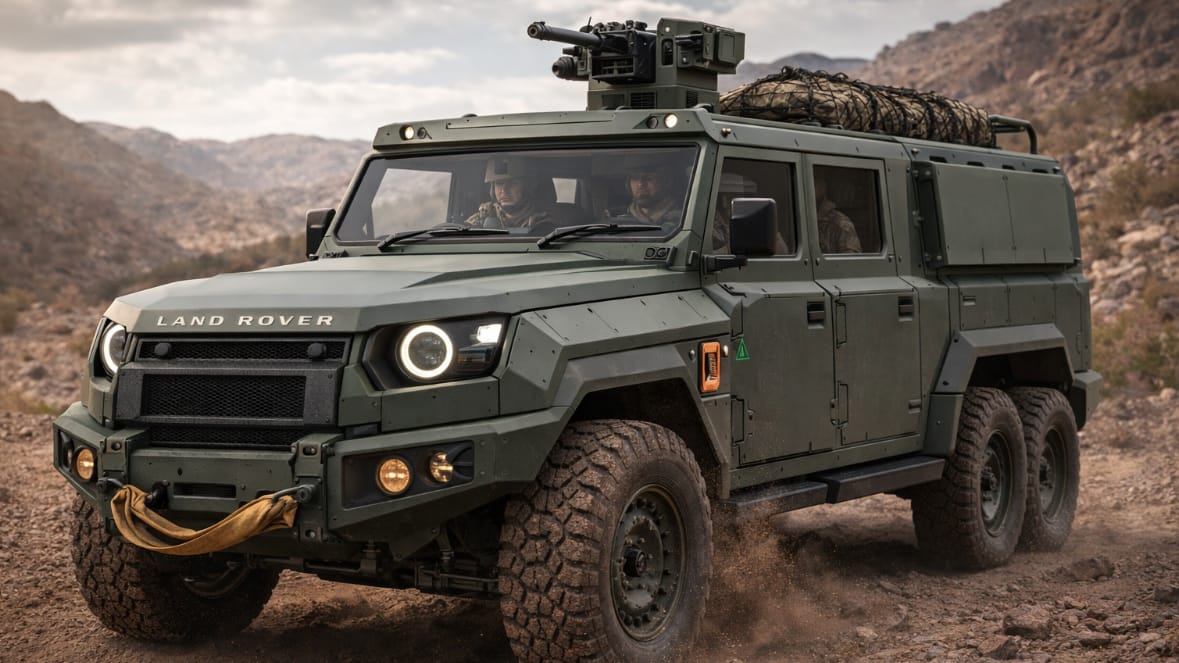
The British Army is preparing to retire one of its most iconic and dependable assets, the Land Rover. After more than seven decades of service across global conflicts, peacekeeping missions and domestic training exercises, the vehicle known as the “Landy” will be phased out by 2030. This transition reflects not only technological advancement but also a growing focus on safety, accountability and the protection of service personnel.
A Chronological History of the Military Land Rover
1947 to 1948
The Land Rover was first conceived by Maurice Wilks in the aftermath of the Second World War. Inspired by the American Jeep, the first prototype was built in 1947 and production began in 1948. Its lightweight aluminium body and simple engineering made it highly durable and easy to repair.
1950s
The British Army quickly adopted the Land Rover as its primary light utility vehicle. It became widely used across post war operations, offering a versatile and cost effective solution for transport, communications and support roles.
1960s to 1970s
Land Rovers were deployed across a range of military environments, including operations in Aden, Africa and Northern Ireland. Their adaptability allowed them to be configured for multiple uses including ambulance units, command vehicles and weapons platforms.
1980s to 1990s
The Defender model became synonymous with British military operations. Land Rovers were used in the Falklands conflict and the Gulf War, reinforcing their reputation for reliability. However, even during this period, safety features remained basic when compared with modern vehicles.
2000s
During operations in Iraq and Afghanistan, Land Rovers were heavily relied upon in the early stages. However, their vulnerability to improvised explosive devices and lack of adequate protection led to criticism and eventual replacement in frontline combat roles by more heavily armoured vehicles. Despite this, they continued to play a key role in training and logistical support.
2010s
The Land Rover remained embedded within the Armed Forces, particularly in training environments across the UK. Ageing fleets, increased maintenance requirements and growing safety concerns began to influence discussions around replacement.
2020s to 2030
As of 2025, approximately 5,000 Land Rovers remain in service. The Ministry of Defence has committed to phasing them out by 2030 under the Light Mobility Vehicle programme. The next generation of vehicles is expected to deliver improved safety systems, enhanced communications and greater operational capability.
Why the Army Is Moving On
The retirement of the Land Rover reflects a wider shift in military expectations. Modern training and operational environments require vehicles that offer enhanced protection, improved stability and integrated technology. While the Land Rover has proven to be dependable, it was not designed to meet the demands of contemporary warfare or current safety standards.
New vehicles will incorporate features such as improved rollover protection, advanced braking systems and reinforced structures. These developments are aimed not only at operational effectiveness but also at reducing preventable injuries during training exercises.
Training Risks and Legal Accountability
Whilst the Land Rover has been an amazing servant for the MOD everything is not faultless in the Army. Military training carries inherent risks, but it is conducted in controlled environments where those risks should be minimised. A significant number of serious injuries occur during training rather than on the battlefield, often involving vehicles, equipment or planning failures.
Common causes include vehicle rollovers, inadequate maintenance, insufficient supervision and failures in risk assessment. The continued use of ageing equipment can increase these risks, particularly where safer alternatives are available.
The legal position is clear. The Ministry of Defence owes a duty to take reasonable steps to protect service personnel. This includes ensuring that equipment is fit for purpose, properly maintained and appropriate for the task being undertaken.
MOD Compensation for Training Injuries
Where injuries occur due to negligence or avoidable failings, service personnel may be entitled to bring a claim against the Ministry of Defence. This applies equally to training exercises as it does to operational environments.
Examples of potential claims include injuries caused by defective vehicles, lack of safety equipment, poor planning or failures in supervision. As the Armed Forces transition to newer vehicles, there is an increasing recognition that legacy equipment may no longer meet acceptable safety standards.
If you or a family member has suffered an injury during a military training exercise, you may be entitled to pursue a claim. For further guidance, visit our page on military compensation claims
The End of Land Rover but the Begin of a new Chapter
The retirement of the Land Rover marks the end of a defining era in British military history. Its legacy is one of resilience, versatility and service across decades of conflict and training.
However, its phase out also signals progress. As the Armed Forces modernise, the emphasis must remain firmly on safety and the protection of personnel. Where that duty is not met, the law provides a clear route for injured individuals to seek accountability and compensation.


