Artificial intelligence is beginning to transform the early detection of breast cancer. A recent NHS study has shown that AI technology was able to identify a tumour that had initially been missed by clinicians during routine screening. This is good news as it adds an extra layer of protection for patients therefore more likely to have better outcomes and life expectancy.
For patients, this development is encouraging. Earlier detection can save lives. However, the research also raises an uncomfortable question. If technology can identify cancers that human readers have overlooked, how many patients may have experienced a delayed diagnosis that could potentially have been avoided? This is were experts solicitors step in to help patients to make a claim for compensation where breast cancer has been spotted late, indeed any cancer where there has been a delayed diagnosis.
From a legal perspective, the issue of missed or delayed breast cancer diagnosis remains one of the most significant areas of clinical negligence litigation in the United Kingdom.
A Real Case Where AI Detected What Doctors Missed
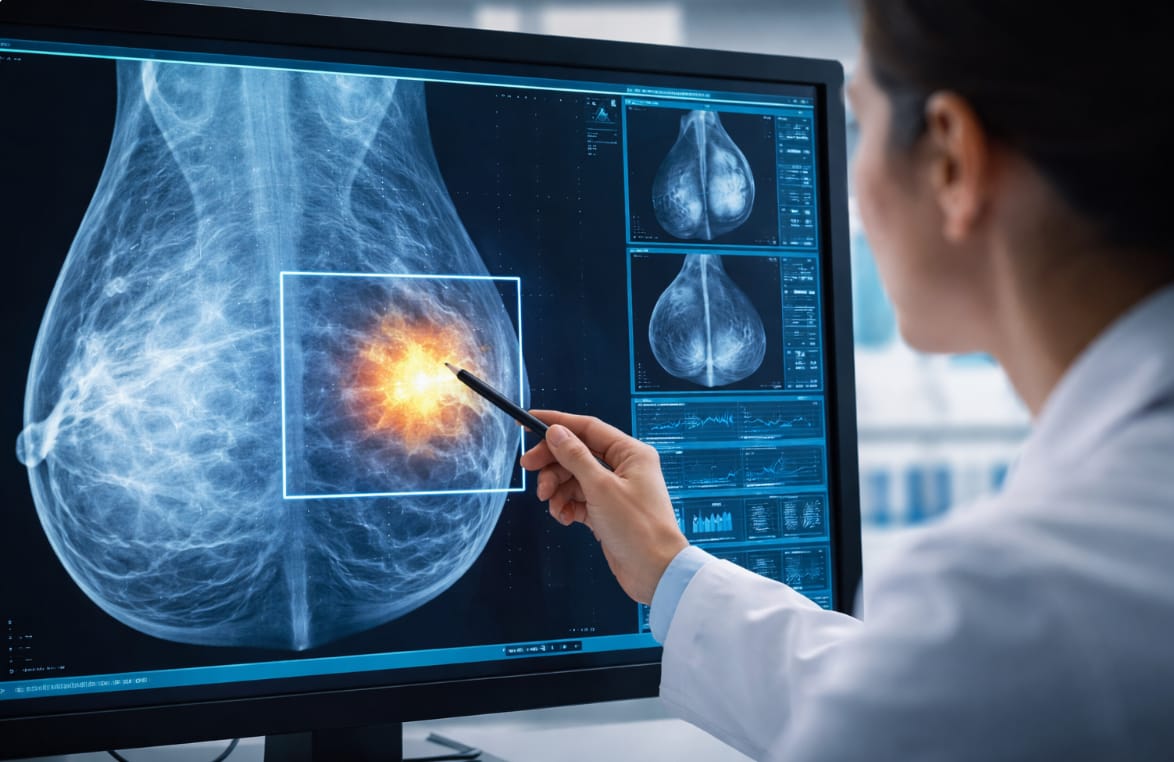
A Scottish woman, Yvonne Cook, discovered she had breast cancer only after an experimental artificial intelligence system reviewed her mammogram and flagged a suspicious abnormality that clinicians had not initially identified.
Her tumour was extremely small and had not been detected during the original screening review. After the AI system highlighted a concern, she was recalled for further testing. A subsequent mammogram confirmed that she had lobular breast cancer, the second most common form of the disease.
She later underwent surgery in December 2023 and a second operation in January 2024 to ensure clear margins. Her treatment concluded with a short course of radiotherapy.
While understandably shocked by the diagnosis, her reaction was largely one of gratitude that the cancer had been caught early through the research programme.
The research behind this discovery was part of a clinical study involving NHS screening data from more than 10,000 women in the Grampian region; Nature Cancer
AI Could Detect Breast Cancers Doctors Miss
The study found that when artificial intelligence was used alongside clinicians to review mammograms, detection rates increased by around 10 per cent.
A separate analysis involving approximately 150,000 women suggested something even more striking. Artificial intelligence could identify about one quarter of breast cancers that had previously been missed on earlier mammograms.
These cancers are often known as interval cancers. They are tumours that were not detected during screening but are diagnosed later before the patient’s next routine screening appointment.
Interval cancers are a major concern because they are frequently diagnosed at a more advanced stage, which can significantly affect treatment options and long term survival.
Why Breast Cancer Is Sometimes Missed
Breast cancer screening is complex and difficult. In the UK screening programme, every mammogram is usually reviewed independently by two trained specialists. If there is disagreement, a senior clinician reviews the scan.
Despite this system, subtle cancers can still be missed.
Some of the most common reasons include:
- Extremely small tumours that are difficult to detect on imaging
- Dense breast tissue that obscures abnormalities
- Lobular breast cancers that spread in a subtle pattern rather than forming a clear lump
- Human error in interpreting scans
- Time pressures and workload within NHS screening programmes
The AI technology studied was able to detect 9.3 cancers per 1,000 women screened, compared with 7.5 detected by a single human reader.
This represents roughly a 24 per cent improvement in detection rates.

The Impact of Delayed Breast Cancer Diagnosis
Early detection of breast cancer significantly improves survival outcomes and or quality of life.
When breast cancer is detected early and remains localised, survival rates are very high. Once the disease spreads to lymph nodes or distant organs, treatment becomes far more complex and survival rates decline.
Delayed diagnosis can lead to:
- Larger tumours requiring more extensive surgery
- Mastectomy rather than breast conserving surgery
- Chemotherapy that might otherwise have been avoided
- Spread of cancer to lymph nodes or other organs
- Reduced life expectancy in severe cases
This is why screening programmes are so important and why failures in detection can have serious consequences.
When a Missed Diagnosis May Amount to Clinical Negligence
Not every missed cancer will amount to negligence. Medical imaging is a complex discipline and some cancers are extremely difficult to detect.
However, there are circumstances where a delayed breast cancer diagnosis may raise legal concerns.
Examples include:
- A mammogram that clearly showed abnormalities which were not investigated
- A patient reporting symptoms such as a breast lump that were dismissed without appropriate imaging
- Delays in referral for specialist breast assessment
- Failure to act on suspicious imaging findings
- Errors in interpreting scans that competent specialists would normally identify
In legal claims involving delayed breast cancer diagnosis, the key question is whether competent clinicians would have identified the cancer earlier and whether earlier detection would have changed the patient’s outcome.
If earlier treatment would have prevented the cancer from spreading or reduced the severity of treatment, a claim may be possible.
Patients seeking advice about potential claims can learn more about delayed breast cancer diagnosis claims on the Hutcheon Law website.
Could AI Reduce Diagnostic Errors in the Future?
Researchers believe that artificial intelligence could significantly improve breast screening programmes.
Potential benefits include:
- Identifying subtle cancers that clinicians might miss
- Reducing the workload for radiologists
- Allowing faster screening results
- Detecting interval cancers earlier
- Supporting overstretched NHS services
Some studies suggest AI could reduce the number of scans specialists need to review by around 40 per cent.
However, the technology is not yet ready for nationwide implementation. Researchers say further large scale clinical trials are needed before AI systems can be routinely used across NHS screening programmes.
Seeking Advice After a Delayed Breast Cancer Diagnosis
If breast cancer was diagnosed at a later stage after earlier symptoms or screening abnormalities were missed, it may be appropriate to investigate whether the delay could have been avoided.
Legal claims involving delayed diagnosis can examine whether earlier detection would have changed the course of treatment or improved the patient’s prognosis.
Specialist solicitors can review medical records, imaging, and expert evidence to determine whether the standard of care fell below what would reasonably be expected.
Understanding what went wrong can help patients and families obtain answers and ensure that important lessons are learned.
The future of early diagnosis is looking bright
Artificial intelligence is rapidly emerging as a powerful tool in cancer detection. The ability of AI to identify cancers that clinicians initially miss could help transform breast screening programmes in the future.
At the same time, the research highlights how easily subtle cancers can be overlooked and why robust diagnostic systems are essential.
For patients, early detection remains the single most important factor in improving survival outcomes.
Where delays occur, it is crucial that those circumstances are carefully investigated to ensure patients receive the answers and support they deserve under our No Win, No Fee, No Worry Claim Service.
Contact Us Now To Claim