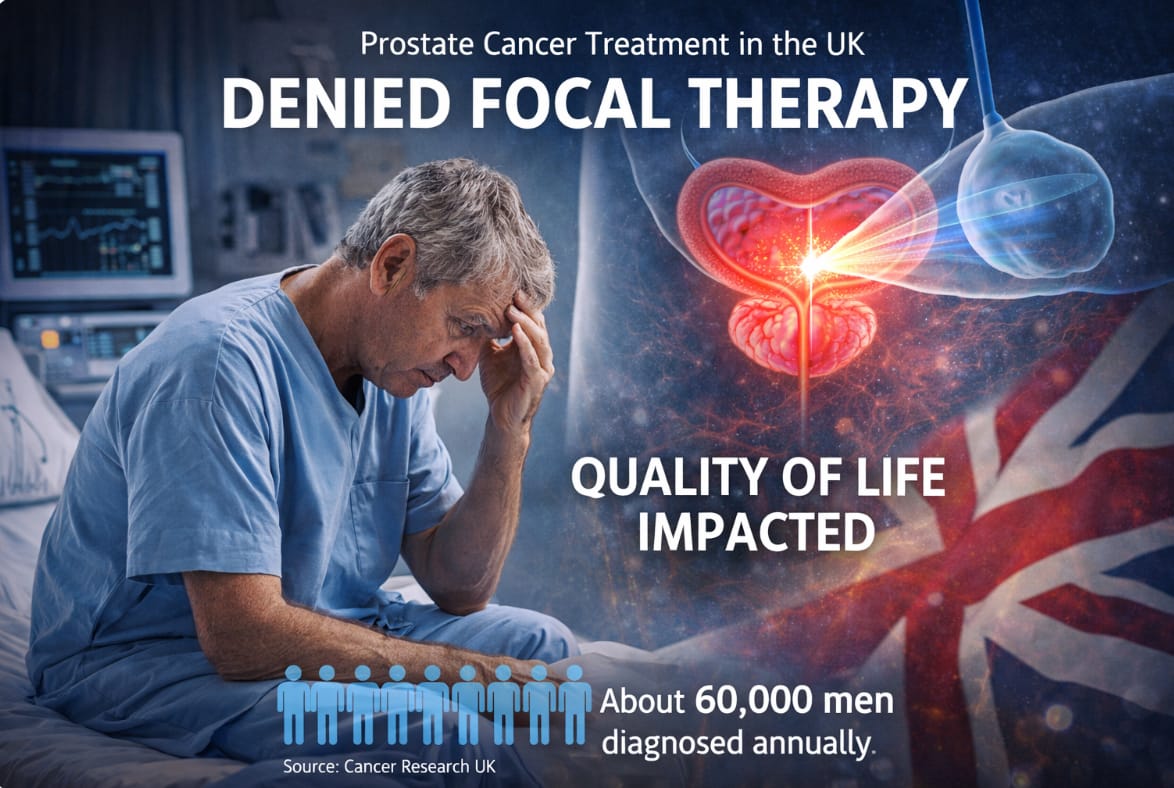
Concerns have been raised by senior urologists that thousands of men diagnosed with prostate cancer in the United Kingdom are not routinely being informed about focal therapy, a targeted treatment designed to preserve continence and sexual function while controlling localised disease.
With prostate cancer now the most commonly diagnosed cancer in men in the UK, treatment choice and informed consent are increasingly significant.
For confirmed national incidence data see:
Cancer Research UK – Prostate Cancer Statistics
Around 60,000 men are diagnosed each year. Many will face difficult decisions between surgery, radiotherapy and active surveillance.
What Is Focal Therapy?
Focal therapy is a minimally invasive treatment that targets only the cancerous portion of the prostate rather than removing or treating the entire gland. The aim is to eradicate the tumour while preserving surrounding healthy tissue.
By avoiding whole gland treatment, focal therapy may significantly reduce the risk of:
Urinary incontinence
Erectile dysfunction
Bowel dysfunction
These complications are well recognised side effects of radical prostatectomy and radiotherapy.
The clinical framework and evidence base for focal high intensity focused ultrasound in localised prostate cancer has been reviewed by NICE. The official summary of evidence can be accessed here:
NICE – Summary of Key Evidence on Focal Therapy Using HIFU for Localised Prostate Cancer
This document outlines available outcome data and confirms that focal therapy has been in UK clinical use for many years under appropriate governance arrangements.
Types of Focal Therapy
The principal focal techniques currently used in specialist centres include:
High Intensity Focused Ultrasound which uses ultrasound waves to generate heat and destroy cancer cells
Cryotherapy which destroys cancer cells using extreme cold delivered through fine needles
Irreversible electroporation, often referred to as NanoKnife, which uses electrical pulses to disrupt tumour cells
These treatments are generally offered to carefully selected men with localised prostate cancer.
The Access Debate
Although focal therapy has been available in the UK since 2006, it is not widely commissioned across all NHS trusts. Access is often limited to specialist centres and some patients report that the option is not routinely discussed during consultations.
The concern raised by clinicians is not that focal therapy replaces traditional treatments in every case. Rather, the issue is whether patients are being given full information about clinically appropriate alternatives that may preserve quality of life.
For many men, particularly those with organ confined disease, long term continence and sexual function are central considerations in treatment decision making.
Informed Consent and Legal Considerations
Modern medical law places emphasis on patient autonomy and informed decision making. Patients must be told about reasonable alternative treatments where clinically appropriate.
If a patient is not informed about an available treatment that may significantly reduce life altering side effects, serious questions can arise regarding consent.
If you or a family member believe that treatment options were not properly explained following a prostate cancer diagnosis, you can read more about your legal rights on our dedicated page covering delayed cancer diagnosis claims page.
While every case turns on its facts, transparency and full disclosure remain central principles of lawful medical practice.
What now for Focal Therapy?
Prostate cancer treatment is evolving. Focal therapy represents a targeted approach that aims to control cancer while minimising long term complications. The clinical evidence continues to develop and national bodies such as NICE have reviewed its use.
The wider debate now focuses on equitable NHS access and whether all eligible patients are being informed of this option. As diagnosis rates continue to rise, ensuring informed consent and balanced discussion of all appropriate treatments is essential.
If concerns arise regarding delayed diagnosis, treatment delays or failure to inform patients of reasonable alternatives, specialist legal advice may be appropriate.


Approved legal advice on compensation for misdiagnoses of prostate cancer
1.Delayed prostate cancer diagnosis claims
Use this as the primary commercial SEO page for all compensation related content.
2.Delayed prostate cancer diagnosis
Use this for educational or explanatory sections within blogs.
3.NHS urged to offer PSA tests to high risk men over 45 amid delayed prostate cancer diagnosis
Use this as a supporting authority blog link when discussing screening failures or policy delay.